The urban block is one of the most enduring planning principles in European history.
From ancient Miletus through Cerdà’s Eixample in Barcelona to Berlage’s Plan Zuid in Amsterdam, the same themes reappear across centuries: the contrast between lively streets and calm green courtyards, the significance of corner articulation, and the permeability of the block through gates and passages.
Our proposal for two new blocks in Žižkov builds on this tradition and reinterprets it for the present day. The emerging district offers high-quality and accessible housing while responding sensitively to its context — the former freight station to the north, cemetery greenery to the south, and the looser contemporary development to the west. It reinforces the evolving identity of this part of the city.
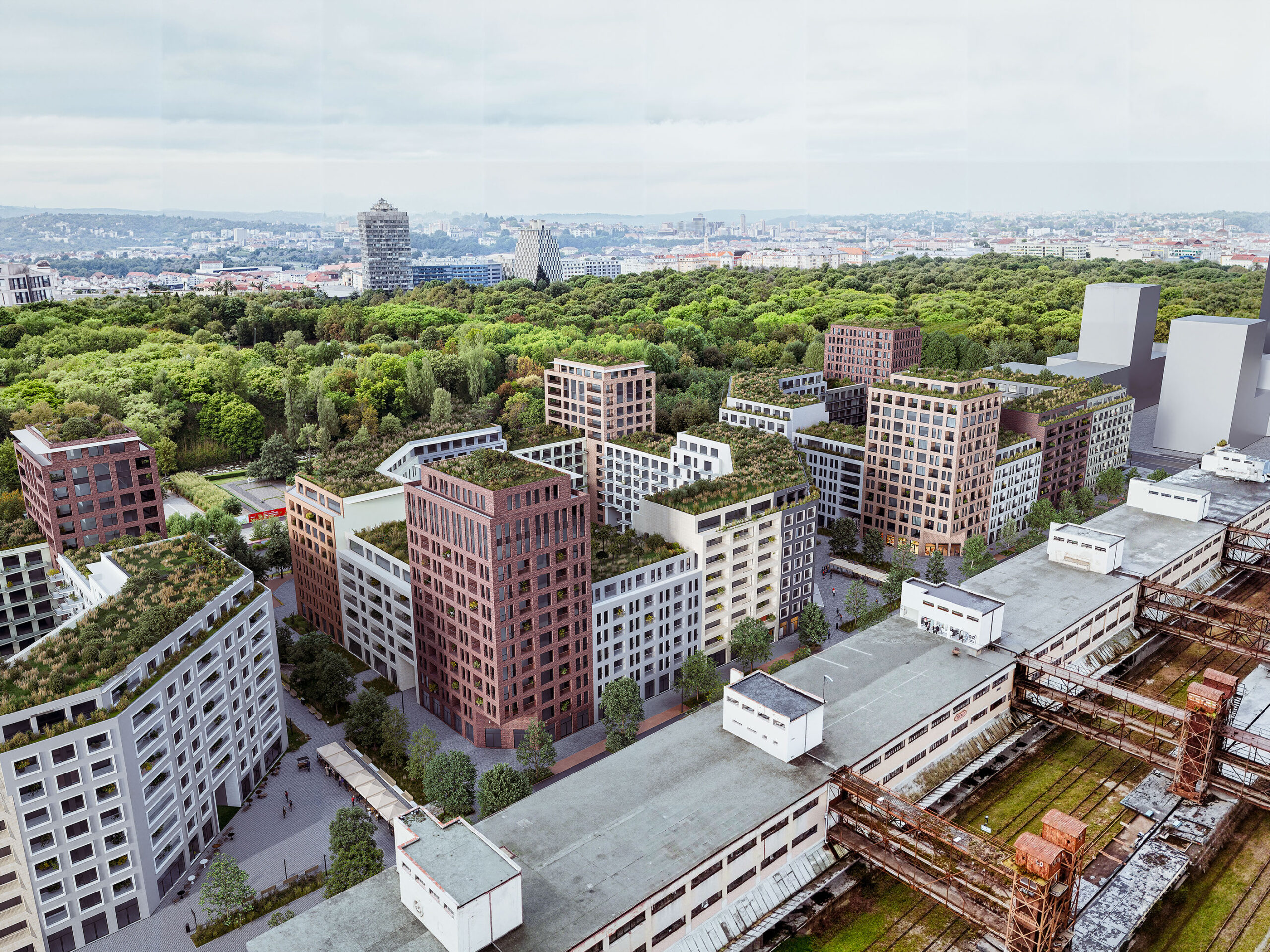
The site is defined by long visual axes and continuous street frontages.
The architectural concept responds with a clear and expressive volumetric structure:
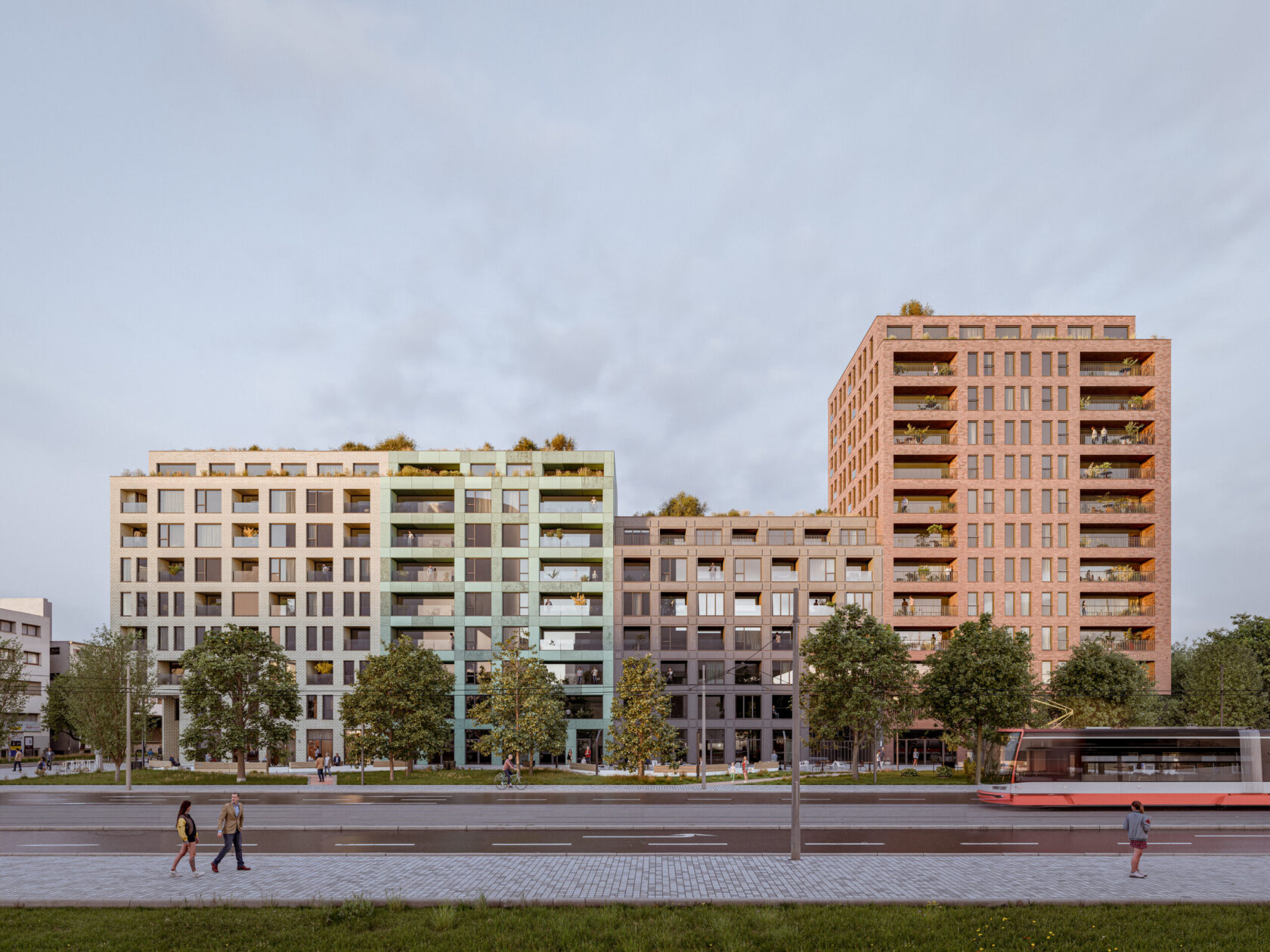
Urban block — 8 floors + recessed level
A compact form with chamfered corners opens up space for public life and defines the character of the streets.
Two vertical accents — 12 floors + recessed level
Tower-like volumes at the corners serve as urban landmarks and give rhythm to the skyline.
Transitional massing — 6 floors + recessed level
A lower middle section softens the silhouette, introduces a more intimate scale, and mediates between the two dominant volumes.
This composition is recognisable from all sides, allows the block to be subdivided into distinct “addresses,” and supports diverse typological solutions.
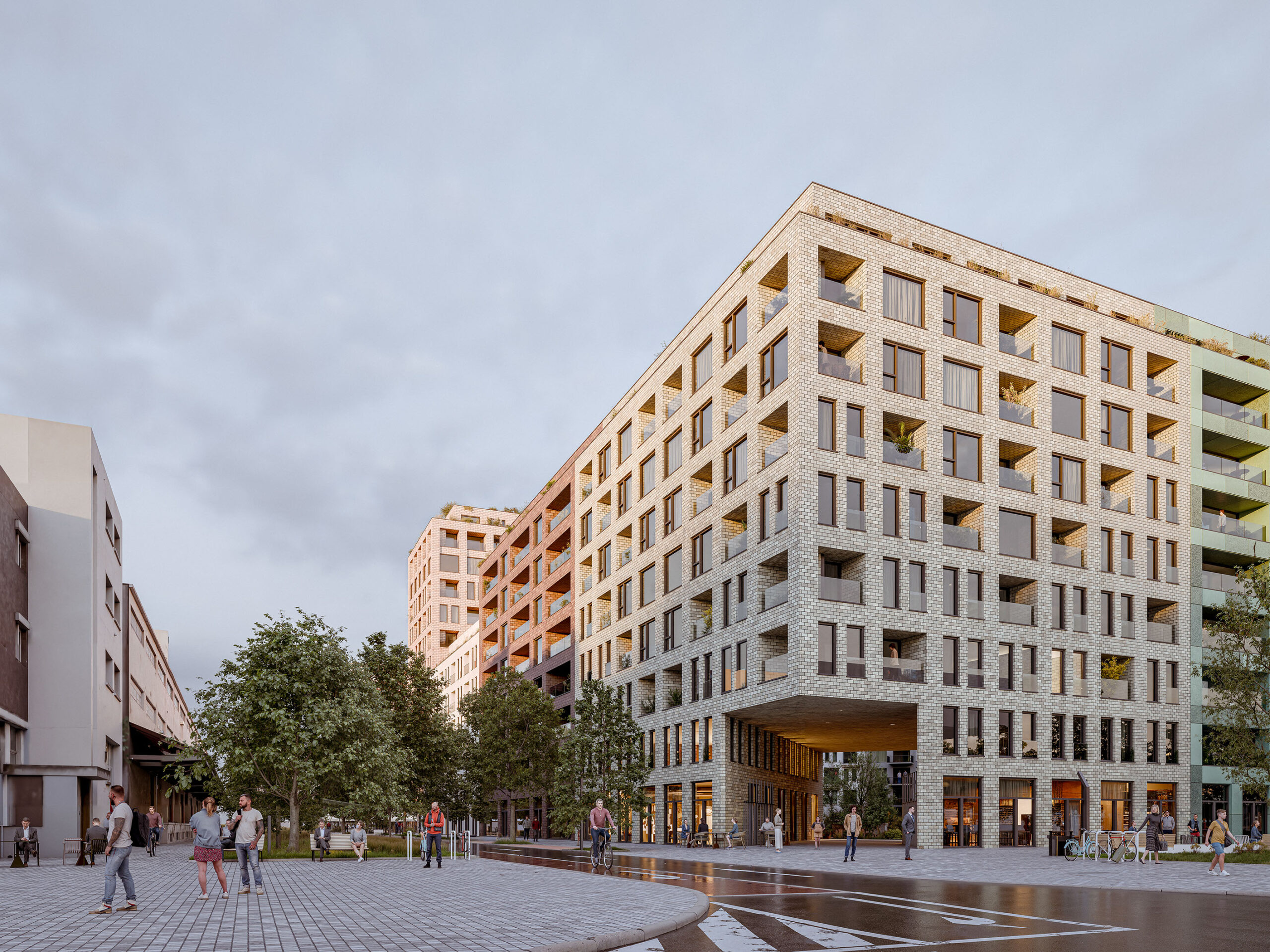
The ambition was not merely to design housing, but to create a living piece of the city.
The blocks act as natural connectors thanks to:
The result is a district with its own identity, reinforcing the broader transformation of Žižkov.
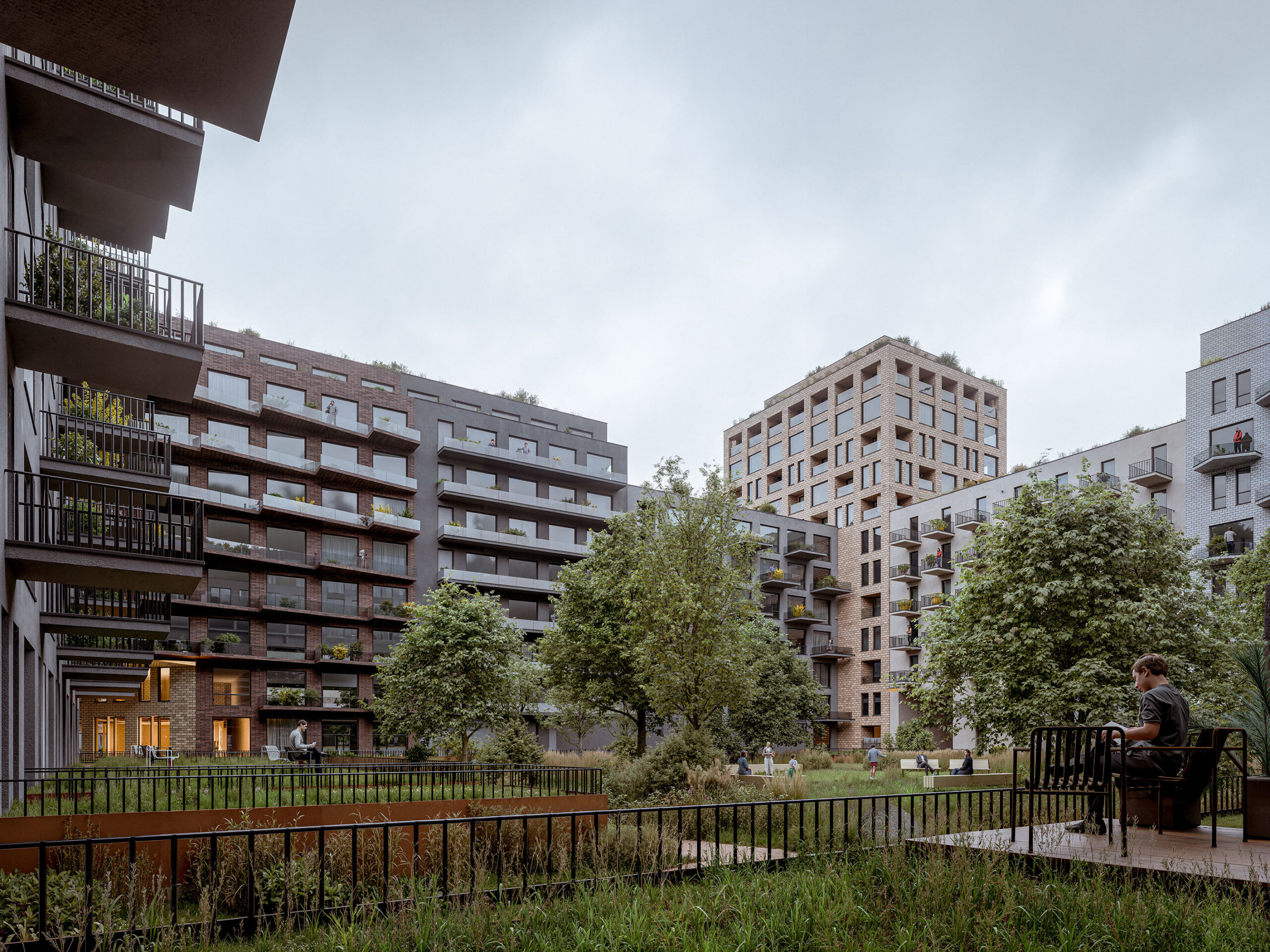
The architectural and urban concept is based on a rational modular system that ensures both quality and affordability:
The outcome is a sustainable, functional and pleasant living environment for a wide range of residents.
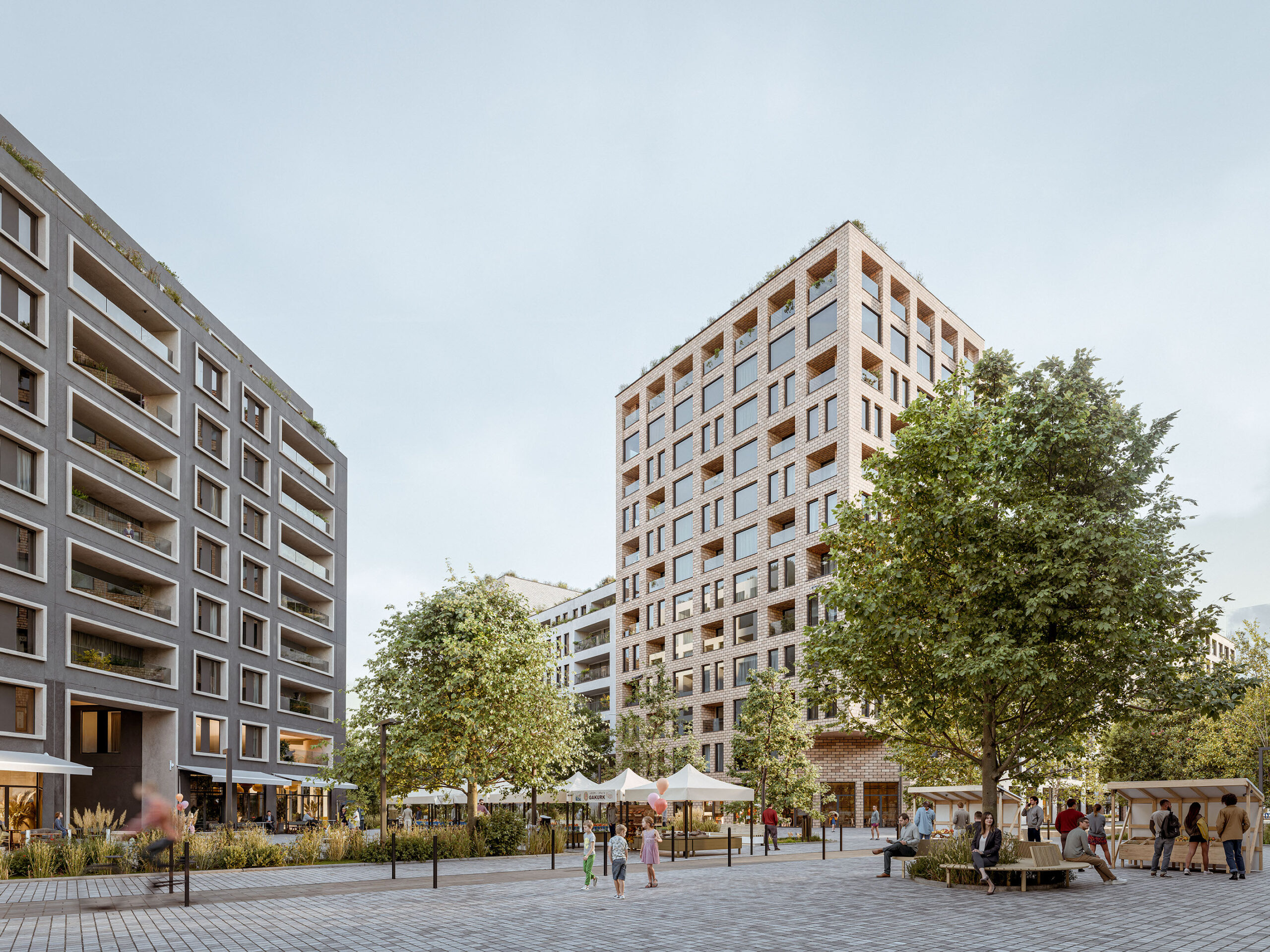
The proposal is designed with climate adaptation and long-term urban sustainability in mind:
Together, these features contribute to a cooler, more resilient urban environment free of heat-island effects.
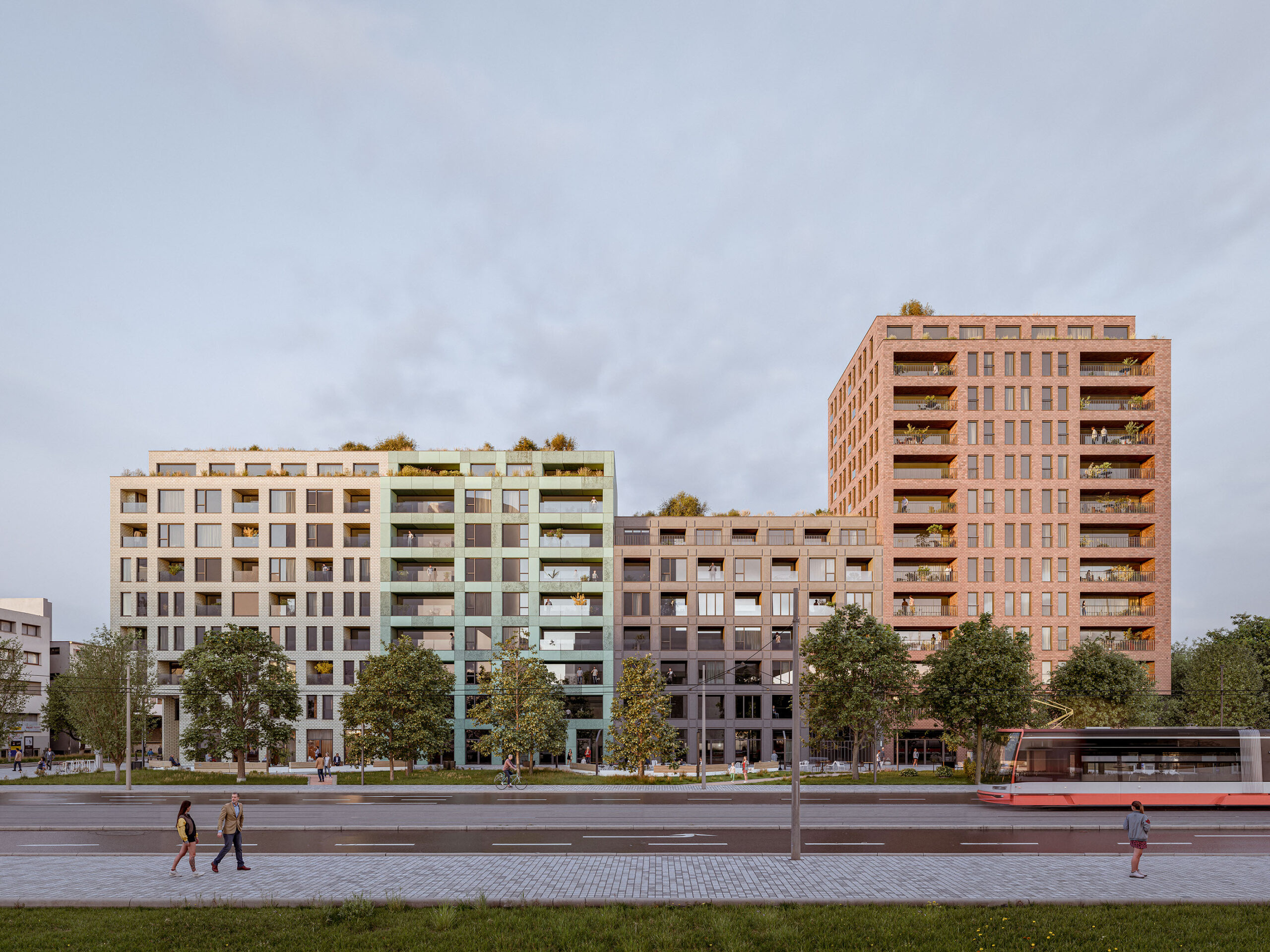
The character of the project is defined by materiality, colour, and scale:
This deliberate contrast makes the block both a strong urban figure and an intimate, liveable home.
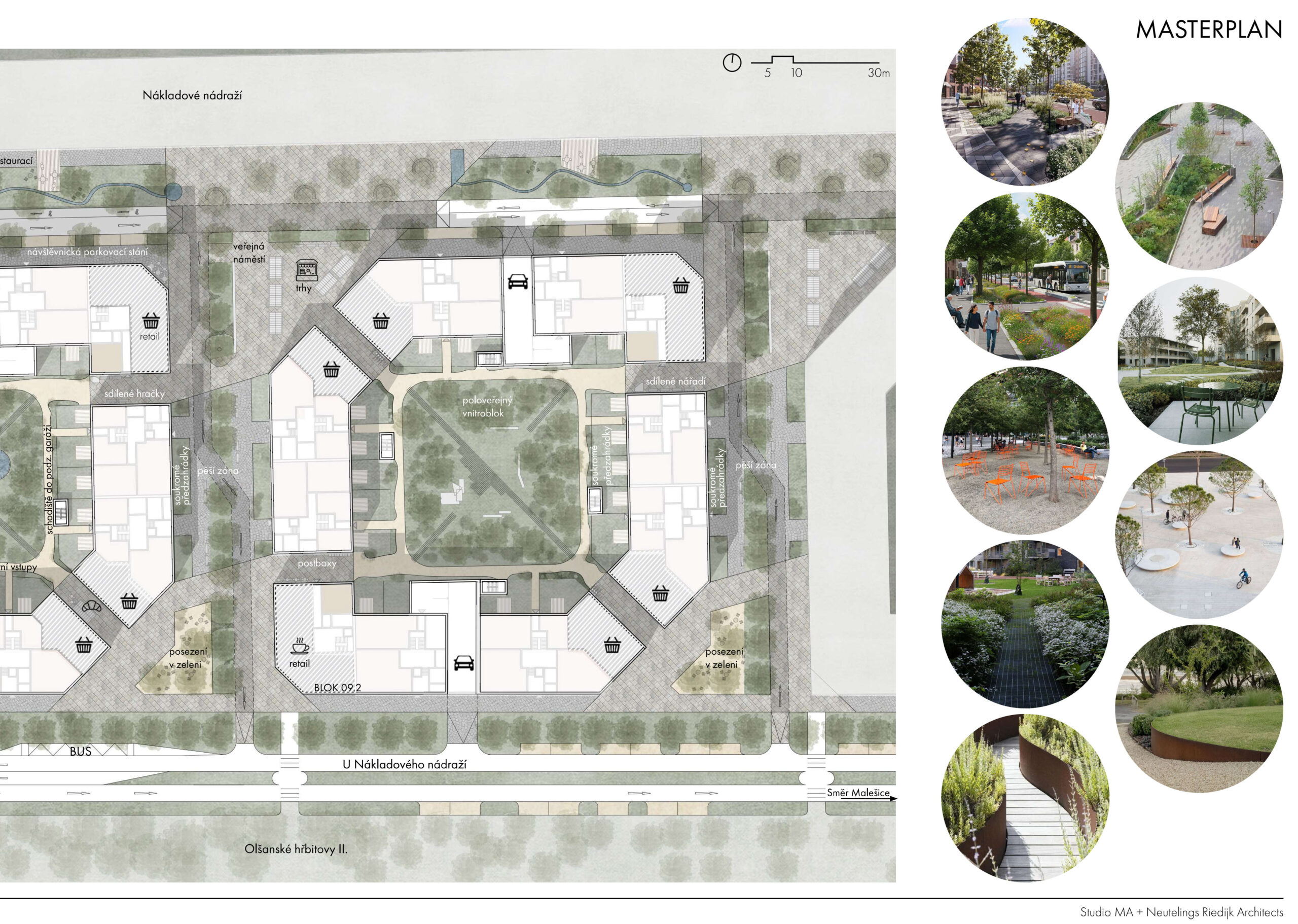
The two residential blocks represent a contemporary reinterpretation of the traditional Prague perimeter block with an enclosed courtyard.
Their distinctive massing, openness, shared spaces, and sustainable design contribute to a city that is:
A confident, modern addition to Žižkov emerges — a district with a clear architectural identity that supports community life and strengthens the long-term character of this part of Prague.